
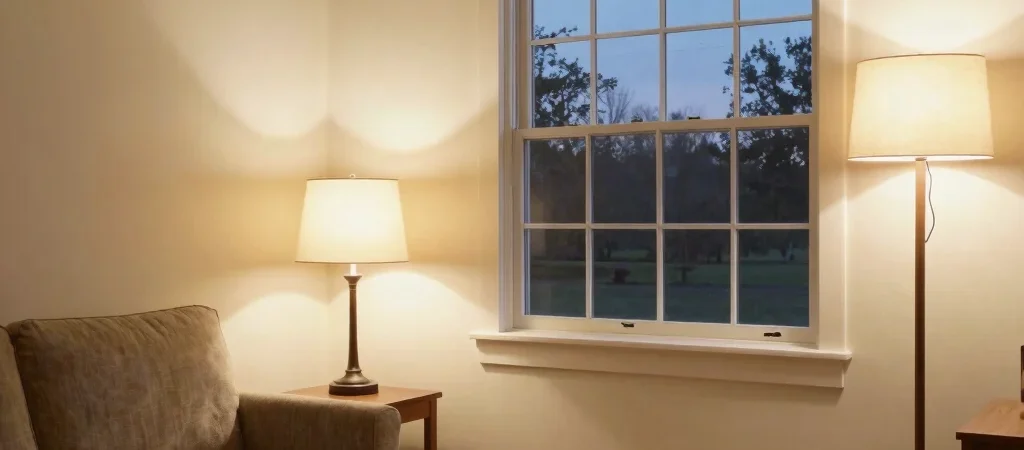
A room that feels welcoming in daylight can seem flat once the sun goes down. Often, the problem is not the furniture or paint; it is relying on one bright ceiling fixture to light every corner. Adding light at a few different heights can make familiar spaces feel more settled and more useful.
Give Each Corner A Purpose
Begin with the places where you read, sew, work a puzzle, or sit with company. A table lamp beside a favorite chair brings light close to the page, while a floor lamp can brighten a dim corner without taking up much tabletop space. Keep switches easy to reach so using the light does not require moving furniture.
Layer Light At Different Heights
A ceiling fixture provides general light, but lamps add softer pools around the room. In a living room, try a pair of table lamps on opposite sides or combine one table lamp with a floor lamp near the seating. You do not need matching fixtures; repeating a finish or shade color is often enough to make the mix feel intentional.
Choose A Softer Evening Glow
For lamps used in the evening, warm-white bulbs can feel gentler than cooler, bluer light. Check the fixture label before choosing a bulb, and consider dimmable bulbs only if the fixture and switch are compatible. A shade also matters: fabric or frosted glass diffuses the light, while a clear shade tends to show the bulb more directly.
Before buying another lamp, try moving one you already own to a darker spot and using it after dinner for a few evenings. That small test will show you where the room needs light most—and whether the change is worth keeping.